Roobet in Brunei: identity, licence and risk check
The first KYC finding is an identity mismatch: the supplied records name roobet.com, but the operator is still unmatched to a Brunei entity, and no matching Brunei licence was found. That does not by itself prove that the service is a scam. It does mean that a visitor should not treat the brand name, a comparison-listing entry or a foreign authorisation claim as proof of permission to offer gambling services in Brunei.

What the identity check establishes
The precise host supplied for review is roobet.com. The supplied operator field says that it has not been matched to a Brunei entity. The supplied licence field says that no Brunei licence matching the service was found. Those are the central facts for a Brunei user deciding whether a login, payment or document request belongs to a locally accountable business.
A brand, a host, an operator and a regulator are different things. A logo can be copied, a domain can be imitated, and a page can use the name of a company that is not the legal counterparty. Before creating an account, compare the exact domain in the browser address bar with the domain shown in the service’s terms, registration notices and payment instructions. The supplied packet does not provide a verified Brunei legal name, a local service address, a local licence number or an expiry date.
| Identity item | Verified position | Practical meaning |
|---|---|---|
| Reviewed host | roobet.com | Check every login and payment page for the exact host. |
| Brunei operator | Not matched | Accountability to a Brunei entity remains unconfirmed. |
| Brunei licence | None matched in the supplied packet | Do not describe the service as locally licensed. |
| Licence expiry | No date supplied | There is no verified expiry detail to rely on. |
Is Roobet legal or a scam in Brunei?
The available signal is amber, with an open-evidence basis. Amber is not an accusation and is not a recommendation. It reflects the unresolved host, operator and local-permission questions, together with the absence of an account, payment or withdrawal test. The evidence does not establish that Roobet is fraudulent, but it also does not establish that roobet.com has Brunei permission.
The supplied copy of the Common Gaming Houses Act, Chapter 28 is a primary legal source for understanding the local statutory context. A law text is not the same as a record confirming that a particular website is licensed. The correct conclusion is therefore narrower: the legal position requires careful checking, and the supplied records do not provide a precise local host-and-licence match.
Similarly, the BDCB alert-list search is described in the evidence packet as a searchable resource for suspicious or unlicensed financial entities. It is not a casino licence register. Finding or not finding a name there cannot be converted into a gambling-licence verdict.
| Question | Evidence-led answer | What remains unknown |
|---|---|---|
| Is the brand listed somewhere for Brunei? | A 2026 Brunei-specific crypto-casino comparison explicitly lists it. | Listing does not prove approval or safe operation. |
| Is a Brunei operator identified? | No matching Brunei entity is supplied. | Legal counterparty and local address. |
| Is a Brunei licence confirmed? | No matching licence is supplied. | Licence number, holder, scope and expiry. |
| Is it proven to be a scam? | No such conclusion is supported by the packet. | Independent account and transaction testing. |
Evidence chronology and source roles
The evidence was checked on 2 September 2026. The first source is a 2026 Brunei-specific comparison that explicitly lists Roobet. Its promotional claims are not adopted here as proof. It is useful for showing that the brand appears in a market-facing comparison, not for proving local authorisation, payment performance or a successful withdrawal.
The second source is the direct text of Chapter 28 supplied from the Attorney General’s Chambers domain. It provides statutory context. It does not identify roobet.com as a permitted service. The third source is the BDCB alert-list search. It can help users understand a financial-warning resource, but the packet expressly limits it: it is not a casino licence register.
| Source role | What it supports | What it cannot prove |
|---|---|---|
| Brunei-specific comparison | Roobet is explicitly listed in a 2026 comparison. | Licence, legality, fair play or withdrawals. |
| Chapter 28 legal text | The supplied statutory framework. | A host-specific permission decision. |
| BDCB alert search | A searchable financial-entity warning resource. | A casino licence result or safety certification. |
| Supplied captures | Visual context from dated review materials. | Authenticity, current status or an account outcome. |
How to verify the host before login
Start with the address bar, not a search advertisement, social post or forwarded message. Confirm that the spelling is exactly roobet.com. Watch for added words, hyphens, altered endings, unusual subdomains or a different top-level domain. A clone may copy colours and layouts while changing only one character in the host.
Next, inspect the page that identifies the contracting party. Look for a complete legal name, jurisdiction, service address, complaints contact and licence details. The supplied packet does not verify those items for Brunei. If the name in the terms differs from the name shown at payment, pause rather than assuming that the difference is harmless.
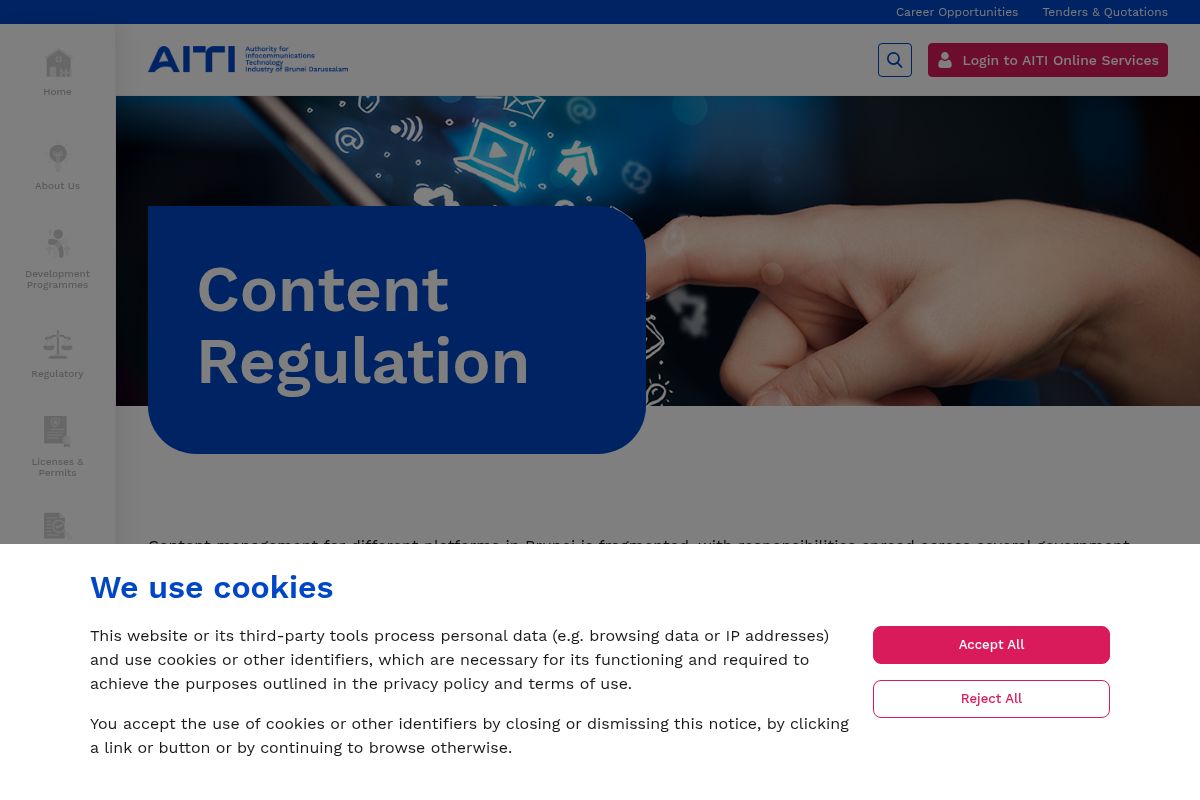
Do not use a screenshot as a substitute for a live regulator record. Screenshots can be old, cropped or detached from their original context. The supplied regulatory capture is included as context only, and the packet does not provide a verified host-specific result from it.
Operator and account-ownership checks
An account should have a clear counterparty. Before providing identity documents, record the legal name displayed in the terms, privacy notice and withdrawal instructions. Compare it with the beneficiary name shown at checkout or in a bank or wallet instruction. A mismatch is not automatically proof of wrongdoing, but it is a material risk question that should be resolved in writing.
Ask which entity receives funds, which entity decides disputes and which entity stores identity information. Keep the answer with the date and the exact host. The current packet supplies no verified answer for these questions. Do not fill the gap with assumptions about a foreign licence, a payment processor or a group company.
- Save the exact host and the relevant terms before registration.
- Check whether the legal counterparty is named consistently.
- Do not send documents through a new domain supplied by an unsolicited message.
- Stop if support refuses to identify the entity responsible for the account.
Payments and beneficiary-name risk
No payment test was completed. The packet therefore does not establish which methods are available, whether a deposit would be accepted from Brunei, how fees are calculated, how long processing takes or whether a withdrawal would succeed. Do not convert a payment-method logo into evidence that a transaction is available or protected.
Before sending money, inspect the final beneficiary or wallet details and compare them with the operator identity. A third-party beneficiary, personal account, unexplained intermediary or last-minute change should be treated as a stop signal until independently explained. Never pay an additional “release”, “tax”, “verification” or “unlock” amount solely because a message says that a withdrawal is waiting. The supplied evidence does not confirm any withdrawal experience, so no success or failure claim is made here.
| Payment checkpoint | Record before paying | Why it matters |
|---|---|---|
| Beneficiary | Displayed recipient and jurisdiction | Tests whether the recipient matches the stated counterparty. |
| Fees | Fee, exchange rate and minimums | Shows the real cost before confirmation. |
| Withdrawal | Conditions, limits and identity triggers | Prevents treating a deposit as proof of liquidity. |
| Support | Ticket number and written response | Creates a chronology if a dispute develops. |
KYC, privacy and document limits
KYC means identity verification, but the existence of a KYC request does not prove that a service is licensed or trustworthy. Ask why each document is needed, which entity receives it, how long it is retained, whether it is shared with processors and how deletion requests are handled. The supplied packet contains no verified privacy-policy findings for this host.
Use the minimum information required by a clearly identified counterparty. Do not send a passport, identity card, selfie or proof of address through a clone, an unverified chat account or a newly supplied domain. Watermark copies where legally appropriate for the stated purpose, while keeping the original file secure. If the service cannot explain its legal identity and data controller, the unresolved privacy risk is reason to pause.
Complaints and an evidence packet
If a dispute arises, preserve the evidence before deleting an account or continuing a payment conversation. Save the exact host, account identifier, dates, transaction references, terms version, support tickets, screenshots and the name of the stated operator. Redact passwords, one-time codes and unnecessary identity numbers before sharing records with anyone.
Write a short chronology: what was deposited, what was requested, when verification occurred, what response was received and what remedy is sought. Keep messages factual and avoid alleging fraud unless a competent record supports that conclusion. A complaint is an allegation until established by an appropriate dated record.
For local information, use the supplied legal and complaint resources on licence and law and complaints and scam warnings. These internal guides do not turn an unresolved host into a licensed operator. The correct escalation route depends on the relevant entity and transaction type, neither of which is verified here.
Clone checks and safer decision rules
A copied logo is weak evidence. Compare the host character by character, open links without relying on displayed labels, and avoid links received through unsolicited messages. Check that the same legal name appears in the terms, privacy notice, payment instructions and complaint contact. A page that pressures you to act quickly, bypasses ordinary verification or changes payment details after contact deserves additional caution.
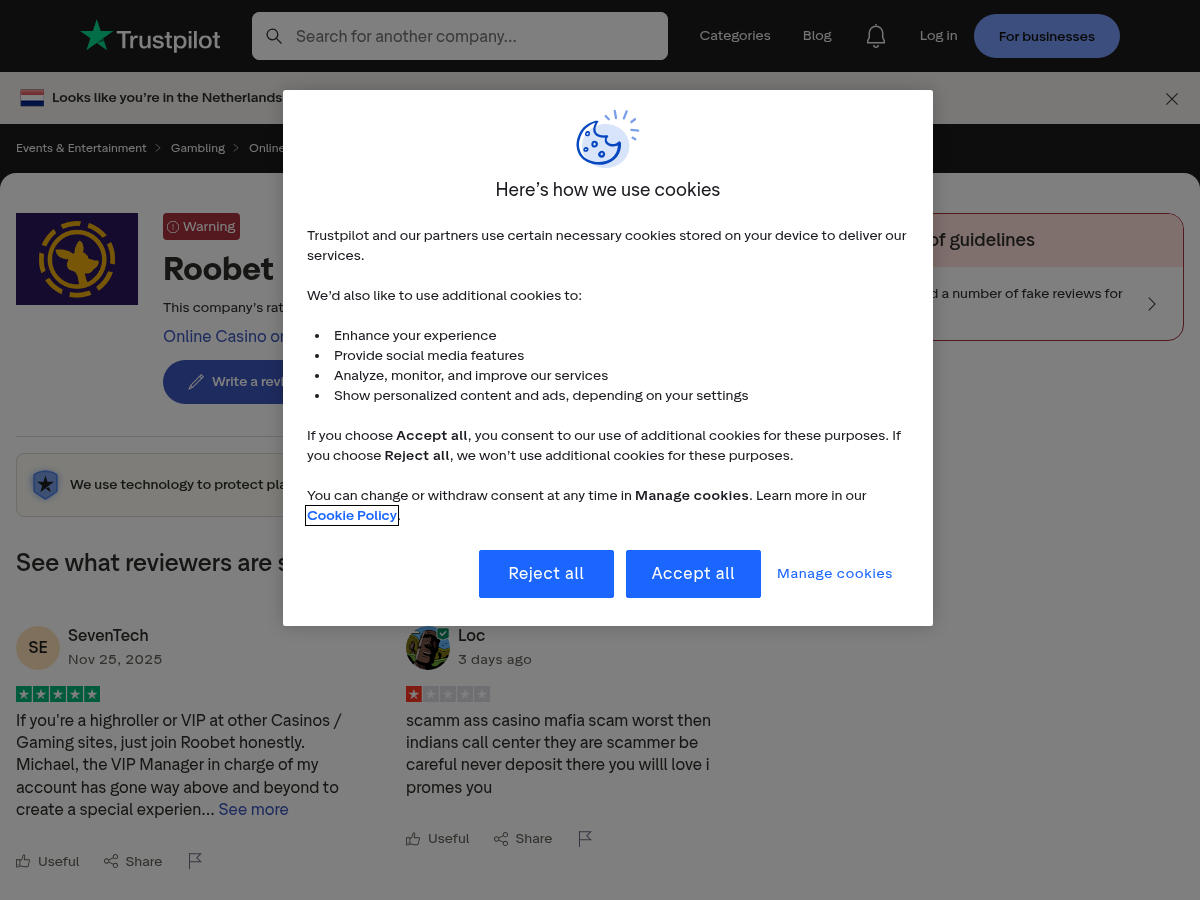
Do not rely on a positive review, a comparison ranking or an absence from a warning list as a complete safety test. User reviews can be useful context, but they are not a primary licence record and do not represent a tested result in this dossier. The supplied independent-review capture is therefore retained only as contextual material.
| Observed condition | Appropriate conclusion | Next step |
|---|---|---|
| Exact host but no matched local entity | Identity remains open. | Request and independently verify the counterparty. |
| Payment recipient differs from terms | Material beneficiary risk. | Pause and obtain a written explanation. |
| Review claims a successful withdrawal | User context only. | Do not generalise it to your account. |
| Clone-like domain or urgent request | Possible impersonation risk. | Do not log in or send documents. |
What is still unknown
The evidence packet does not answer whether an account can be opened from Brunei, which payment methods currently work, whether withdrawals are processed, what KYC thresholds apply, which entity owns the account relationship or whether any foreign licence covers a Brunei user. It also provides no verified local licence number, expiry date, tested support response or account outcome.
These gaps are important because they prevent a stronger verdict. They are not invitations to infer failure, and they are not reasons to describe the service as safe. Until the precise host, counterparty and applicable permission are documented, the evidence remains open.
Method and correction path
This dossier separates primary records from promotional material and user context. It adopts only the three supplied source claims, records the 2 September 2026 checking date and does not claim an account, payment or withdrawal test. The comparison source is used only to establish that the brand is explicitly listed. Chapter 28 is used as legal context. The BDCB resource is treated as an alert search, not a casino register.
If a correction is needed, provide the exact host, a dated regulator record, the legal operator name, the licence number and scope, and a source showing how the record matches the account-facing domain. For a payment or withdrawal claim, provide a dated, reproducible transaction record with sensitive information removed. Corrections should identify the precise sentence affected rather than relying on a general assertion.
Readers who choose to inspect the service should treat the unresolved identity and permission questions as decisive practical limitations. Any decision to proceed should follow independent verification, not the presence of a logo, a ranking or a promotional statement. View play options only after confirming the exact host, operator identity and applicable local position.
tribuna.com
Frequently asked questions
Is Roobet licensed in Brunei?
The supplied evidence does not identify a Brunei operator or a matching Brunei licence for roobet.com. It would be inaccurate to describe the service as locally licensed on this record.
Does the amber signal mean Roobet is a scam?
No. Amber means the evidence is open. The packet does not establish fraud, but it also does not verify local permission, account ownership, payments or withdrawals.
Does a Brunei comparison listing prove legality?
No. The supplied 2026 comparison explicitly lists Roobet, but its promotional claims are not adopted as proof of a licence, legality or transaction reliability.
Can the BDCB alert list confirm a casino licence?
No. The supplied BDCB resource is an alert-list search for suspicious or unlicensed financial entities, not a casino licence register.
Should I send identity documents for KYC?
First identify the legal counterparty, purpose, storage arrangement and secure submission channel. The supplied packet does not verify those privacy details, so sending documents before resolving them carries an unresolved risk.
Was a withdrawal tested?
No. There was no account test, payment test or withdrawal test. The dossier therefore makes no claim about processing speed, success, failure or fees.