BC.Game in Brunei: payment and licence evidence review
The first question is not whether the interface looks polished. It is where a Brunei user’s money would go, which legal entity would receive it, and whether that entity can be matched to a current local permission. The supplied evidence does not establish that match. The precise hostname under review is bc.game. The stated operator is Belum dipadankan dengan entiti Brunei, and the licence result is Tiada lesen Brunei yang sepadan ditemui.
That is not the same as a finding that every person connected with the service has committed an offence, nor is it proof that a withdrawal would fail. No account test, payment test or identity-verification test was supplied. The appropriate conclusion is therefore limited: the evidence remains open, and a Brunei licence or Brunei operator match has not been demonstrated.

What the money trail currently shows
A payment audit begins with the receiving party rather than with a bonus, game catalogue or user rating. A user should be able to identify the exact service host, the contracting operator, the recipient of funds, the available payment channel and the conditions for returning funds. The supplied packet does not provide a matched Brunei entity, a Brunei licence number, a tested deposit, a tested withdrawal or a bank confirmation.
| Audit point | Verified position | Meaning for a user |
|---|---|---|
| Exact host | bc.game | Check spelling before logging in or paying. |
| Brunei operator | Not matched to an entity | The contracting party remains unresolved. |
| Brunei licence | No matching licence found | Do not describe the service as locally licensed. |
| Payment test | Not supplied | Fees, timing and success cannot be verified. |
| Withdrawal test | Not supplied | No performance claim can responsibly be made. |
Payment branding alone would not solve these gaps. A familiar bank, wallet or card rail may process a transaction without confirming that the underlying gaming service is authorised in Brunei. A screenshot of a balance also would not prove that money can be withdrawn under the advertised conditions. Keep the evidence separate: a transaction record shows that money moved; it does not by itself establish a licence, a solvent operator or a legal right to offer gambling services.
Exact host, operator and licence match
The central identity test has three parts. First, type or inspect the exact hostname and look for deceptive variations, extra words, substituted characters or a different top-level domain. Second, compare the legal operator named in the terms, registration pages and payment instructions. Third, check whether the same legal entity and hostname appear together in a competent Brunei licensing record.
| Identity item | What should match | Current result |
|---|---|---|
| Hostname | The address shown in the browser and payment flow | bc.game is the supplied domain. |
| Operator | A named legal entity with a consistent address | Not matched to a Brunei entity. |
| Licence | Authority, number, holder, scope and status | No matching Brunei licence was found. |
| Payment recipient | A recipient consistent with the named operator | Not tested or verified. |
A foreign authorisation, if one were later shown, would not automatically amount to permission to serve customers in Brunei. It would also need to be checked against the precise holder, domain, product and jurisdiction. No foreign licence is adopted here because none was supplied as verified evidence. Do not treat a logo, badge, copied licence number or search result as a substitute for a current primary record.
What the supplied sources establish
The dated source packet contains three primary records, each with a narrow role. A Brunei-specific bookmaker comparison explicitly lists the service among brands discussed for that market. Its promotional statements are not adopted as findings. The Attorney General’s Chambers document supplies the text of the Common Gaming Houses Act, Chapter 28, which is relevant to understanding the legal framework. The Brunei Darussalam Central Bank search is an alert resource for suspicious or unlicensed financial entities; it is expressly not a casino licence register.
| Record | Role | Limit |
|---|---|---|
| Brunei-focused comparison | Shows that the brand is discussed in a market-specific comparison. | Does not prove approval, operator identity or payment reliability. |
| Common Gaming Houses Act, Chapter 28 | Primary legal text for the stated statutory framework. | Does not identify this service or decide an individual user’s case. |
| Central Bank alert search | Allows checks for listed suspicious or unlicensed financial entities. | It is not a casino licence register; absence from it is not clearance. |
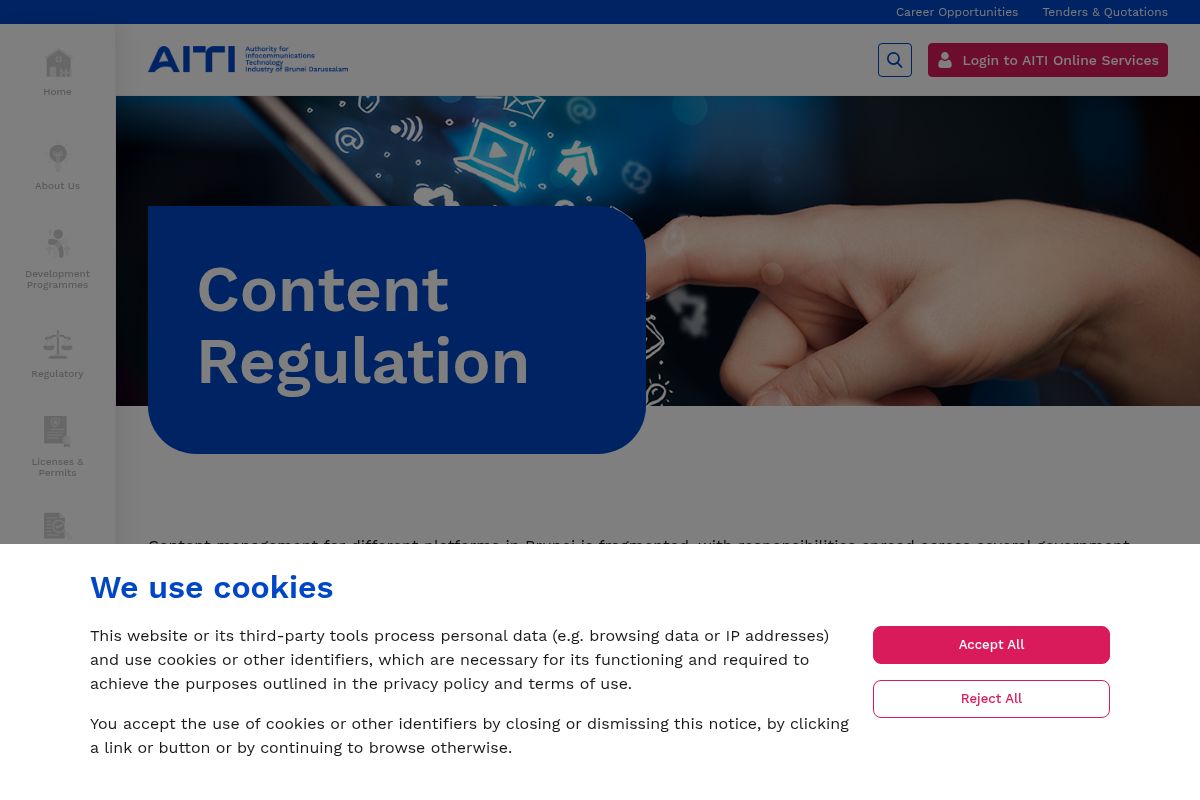
The chronology matters. All three ledger records were checked on 2026-09-02. The market comparison is evidence of listing, the statute is evidence of the legal text, and the alert search is evidence of the type of financial warning resource available. None of these records closes the identity and payment gaps. The signal is consequently amber with an open-evidence basis, not green approval and not a red adverse finding.
Is it a scam or legitimate service?
The available material cannot support either a definitive scam finding or a positive legitimacy verdict. A listing in a comparison is not a fraud determination. Equally, a professional design, active login page, customer testimonials or a successful small transaction would not prove that the operator is licensed or that larger withdrawals will be honoured.
Use a cautious classification: the service is identifiable by the supplied hostname, but the Brunei operator and licence remain unresolved. This distinction protects users from two common errors. The first is calling a service safe because it appears in a list. The second is calling it a scam solely because the packet does not contain a local licence. Missing evidence creates risk and uncertainty; it does not automatically prove criminal conduct.
Do not submit identity documents until the legal recipient, privacy terms, retention practices and verification purpose are clear. Do not send funds to a personal account, a changing recipient, an unrelated business or a channel that cannot issue a traceable receipt. A demand for an extra payment before releasing a withdrawal is a serious warning sign, but no such event was supplied here and none is alleged.
Payments and bank evidence
For any proposed deposit, record the displayed currency, amount, fee, recipient name, reference number and timestamp. Save the confirmation before closing the payment screen. Compare the recipient with the operator named in the contractual documents. If a payment intermediary appears, identify whether it is merely processing the transfer or is presented as the gaming counterparty.
| Before depositing | Evidence to retain | Stop condition |
|---|---|---|
| Read the payment instructions | Recipient, fee, limits and timestamp | Recipient is unexplained or changes at checkout. |
| Check account ownership | Named contracting party and transaction reference | Payment goes to an unrelated individual or company. |
| Check withdrawal rules | Minimum, fees, verification and processing terms | Terms are missing, contradictory or changed after deposit. |
| Check communications | Emails, tickets and stated deadlines | Support demands secrecy, urgency or repeated extra payment. |
There is no supplied evidence that a Brunei bank accepted, rejected or reversed a transaction for this service. There is also no supplied evidence of a payment provider’s independent assessment. Accordingly, statements about fast deposits, reliable withdrawals, available local banks or supported wallets would be unsupported. The correct practical advice is to avoid risking money that is needed for living costs and to treat every unverified payment path as reversible only in theory, not as guaranteed.
KYC and the unresolved entity problem
Know-your-customer checks can be legitimate compliance steps, but their presence does not prove that a service is locally authorised. Before sending a passport, identity card, address document or selfie, identify the legal entity collecting it, the purpose of collection, the storage period, the privacy contact and the process for correcting or deleting information where applicable.
The supplied packet contains no account test and no KYC test. We therefore cannot state which documents are requested, whether verification is completed by the operator or a contractor, how long it takes, or what happens when a user’s name, address or payment account differs. A mismatch between the name receiving money and the entity requesting identity documents should be treated as an unresolved risk, not explained away as normal.
Use a separate password, enable available account security, and avoid reusing identity documents across unfamiliar services. Do not share one-time codes with support staff. These are precautionary measures, not findings about this operator.
Legal limits and the meaning of a local licence
The supplied Common Gaming Houses Act, Chapter 28, is the primary legal text included for the Brunei framework. It should be read in its current official form and applied with appropriate legal advice where a person faces a specific investigation, payment dispute or enforcement concern. This dossier does not provide a personal legal opinion.
The practical licensing question is narrower and easier to test: does a competent Brunei record identify the same hostname, legal holder and permitted activity? On the supplied evidence, that match is absent. A foreign website, overseas company, foreign licence claim or market comparison cannot be relabelled as Brunei permission. The Central Bank alert search should also be used only for its stated warning function. Not appearing on an alert list does not create a gaming licence.
For the legal framework and licensing checks, consult Brunei licence and law guidance. The link is general information, not a substitute for professional advice or a regulator’s individual decision.
Clone checks and safer verification
Cloned services often rely on a near-identical hostname, copied branding, search advertisements or messages that redirect users to a different payment page. Start from a saved, correctly typed address rather than an unsolicited message. Compare the hostname at every step: registration, login, deposit, withdrawal and support. A redirect is not automatically fraudulent, but an unexplained change requires verification.
| Check | Safer practice | Why it matters |
|---|---|---|
| Address | Inspect every character and the security certificate warning status. | Lookalike hosts can capture credentials. |
| Brand assets | Use the supplied logo only for recognition, not authorisation. | Images are easy to copy. |
| Messages | Do not use unverified links in social messages or email. | Redirects can lead to clones. |
| Payment screen | Stop when the recipient differs from the disclosed operator. | Funds may go to an unrelated party. |
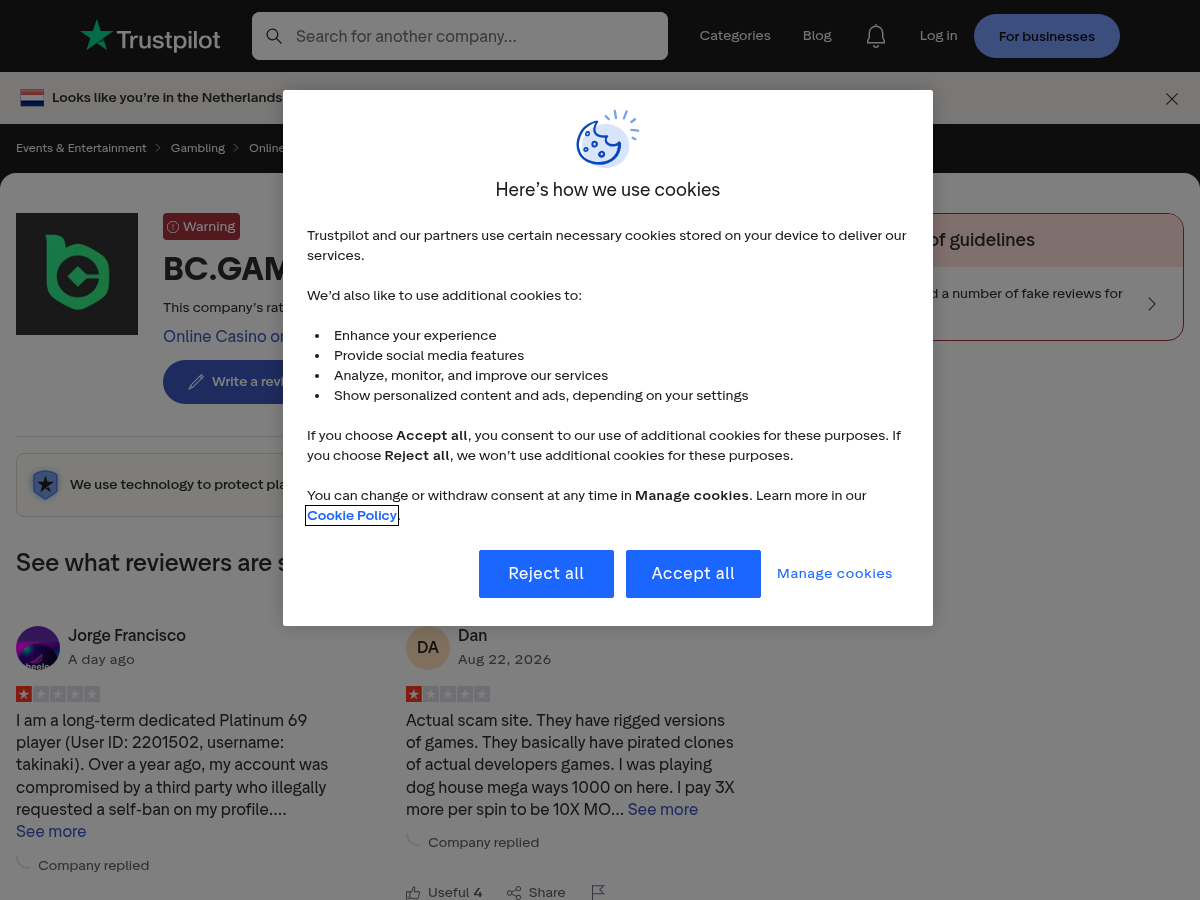
A supplied capture from an independent review platform is contextual only. It may show that a review page exists, but it does not authenticate every reviewer, prove a transaction or establish a licence. It should not be used as a substitute for a regulator’s record.
Complaints, records and escalation
If money has already been sent, preserve the transaction receipt, full web address, account identifier, support correspondence, screenshots, dates, amounts and recipient details. Do not edit images or delete messages. Ask the service for a written explanation and a clear withdrawal or refund status, but do not make further payments merely to unlock a supposed refund.
For a suspected clone, misleading financial request or suspicious recipient, use the relevant complaints and scam-warning guidance. Contact your bank or payment provider promptly through its official channel and ask what recovery, recall or fraud-reporting options exist. A bank can explain payment processes; it cannot necessarily determine whether a gambling service is licensed.
Keep allegations carefully separated from established facts. A user report may describe an experience, but it does not prove the underlying event without corroboration. This packet contains no verified complaint, withdrawal failure, successful withdrawal, account closure or personal experience. None is attributed to the operator or to any individual.
Method, signal and correction path
The method is source-led. We identify the exact host, separate operator statements from primary records and user context, compare the claimed entity with the relevant local permission, and record what was not tested. We do not infer a payment method, licence, legal entity, quote, outcome or personal experience from absence, design or promotional wording. The sources were checked on 2026-09-02.
| Signal | Use | Current application |
|---|---|---|
| Green | Current primary evidence matches the precise host and entity. | Not reached. |
| Amber | Important evidence is open, incomplete or not independently matched. | Current signal. |
| Red | Official adverse record or corroborated documented adverse evidence. | Not reached from the supplied packet. |
The amber signal should not be read as approval. It means that the packet supports caution while leaving material questions unresolved. A correction should include the exact hostname, the named legal entity, the licence authority and number, the date of the record, and a direct primary source. Send corrections through the contact route; unsupported promotional claims, copied screenshots and anonymous assertions are not enough to change a finding.
If gambling is causing financial or emotional harm, pause access and seek help through responsible-gambling support or urgent help information. The safest decision is not to deposit while the local operator and licence match remain unresolved. If you choose to inspect the service despite these limits, use only money you can afford to lose, protect your identity documents and retain a complete audit trail. View play options only after checking the host, recipient and legal information yourself.
tribuna.com · agc.gov.bn · bdcb.gov.bn
Frequently asked questions
Is BC.Game licensed in Brunei?
No matching Brunei licence was found in the supplied evidence. The operator is also not matched to a Brunei entity. That means local authorisation has not been demonstrated; it does not by itself prove a criminal offence.
Is BC.Game a scam?
The supplied records do not establish a scam finding and do not establish safe or legitimate operation. The service is listed in a Brunei-focused comparison, but promotional listing is not proof of licensing, payment reliability or operator identity.
Can I trust a payment or withdrawal claim?
No payment or withdrawal test was supplied. Claims about deposit speed, withdrawal success, fees, local banks or wallets should therefore be treated as unverified until supported by direct, current evidence.
What should I check before sending identity documents?
Confirm the exact hostname, legal entity, privacy information, purpose of the check, document retention terms and payment recipient. Do not share one-time codes, and stop if the entity collecting documents differs from the disclosed operator.
What should I do after a suspicious payment?
Save receipts, addresses, messages, account details and timestamps. Contact the bank or payment provider through its official channel quickly, request available recovery options, and follow the complaints and scam-warning guidance for reporting and escalation.
Can this finding be corrected later?
Yes. A correction should provide a dated primary record that matches the exact hostname, legal entity, licence authority, licence number and permitted activity. Send that evidence through the contact route so the identity and date can be checked.